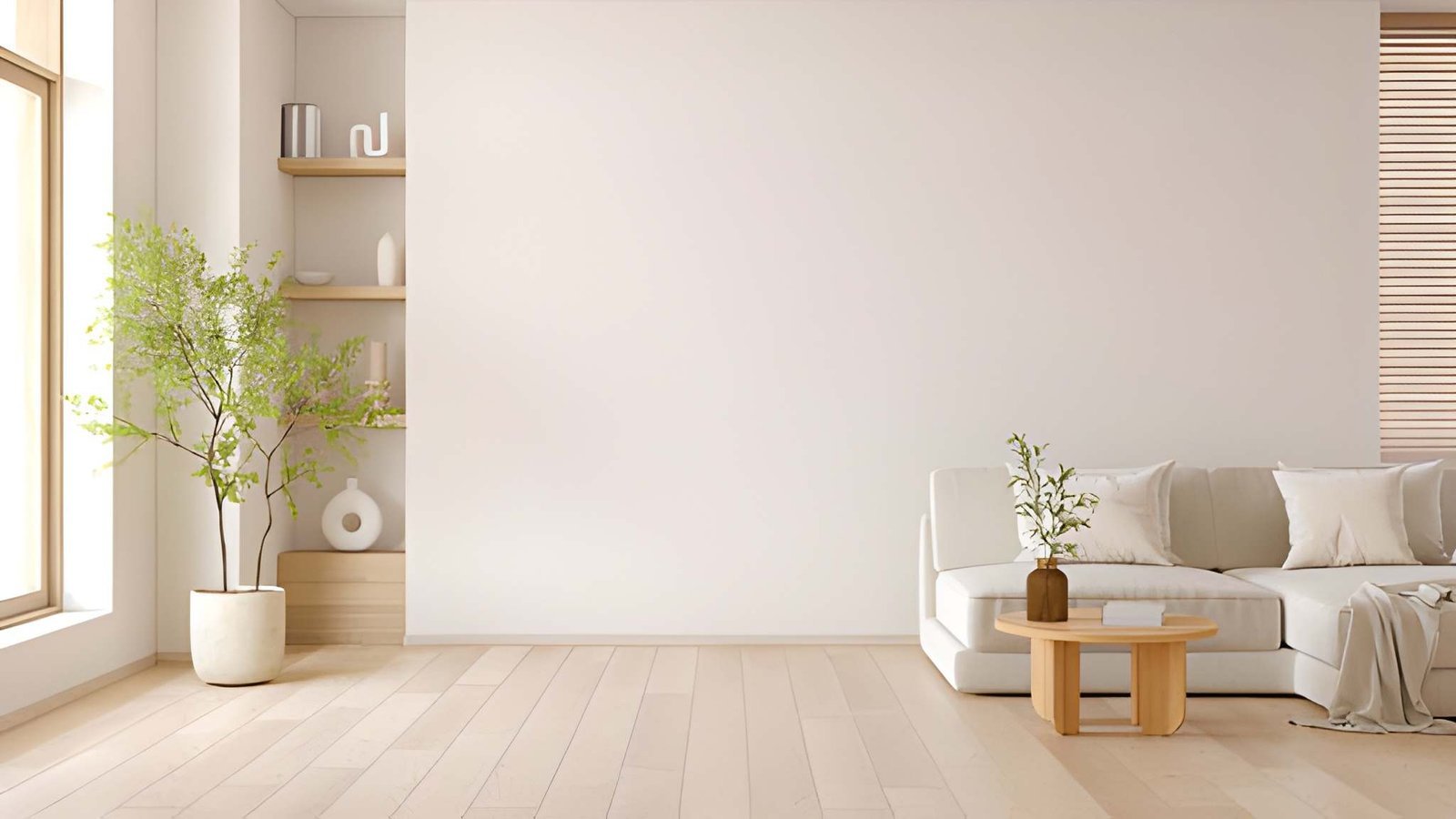
My cousin has this living room. Nothing in it cost much — a second-hand sofa, some plants she propagated herself, curtains from a discount store. But every single person who walks in there comments on how nice it feels. I spent years trying to figure out what she was doing that I wasn’t. Turns out it wasn’t about money at all.
Most of us approach our living rooms wrong. We think decorating means buying new things. It usually doesn’t. It means paying attention to what’s already there, and making a few small, deliberate changes. That’s it.
Why the living room actually matters
You spend more time in this room than any other. It’s where you land after work, where you have people over, where you zone out on weekends. Research in environmental psychology has shown that messy, poorly arranged spaces push up cortisol levels — basically, clutter stresses you out even when you’re not consciously noticing it.
A room that’s been thought through even a little — decent lighting, things in the right places, some breathing room — genuinely affects how you feel at home. This isn’t soft stuff. It’s real.
Before you touch anything: figure out what you actually want
This step gets skipped constantly and it’s why so many living rooms end up looking like a garage sale — not because the pieces are bad, but because they weren’t chosen with any particular direction in mind.
You don’t need a mood board or a design vocabulary. Just ask yourself: do I want this room to feel calm and minimal, or warm and layered? Those two directions — minimal versus cozy — require almost opposite decisions. Minimal means restraint: one plant, clean surfaces, a single piece of art. Cozy means accumulation: throws, mismatched cushions, candles, warmth everywhere.
Neither is better. But trying to do both at once, without thinking about it, is usually what creates visual chaos.
Move stuff around before you spend anything
Genuinely the first thing to try. It’s free, it takes an afternoon, and it can completely change how a room feels.
The most common setup mistake: pushing everything against the walls. It creates this hollow empty feeling in the center, like nobody actually lives there. Pull the sofa and chairs away from the walls, angle them toward each other. You want people to be able to have a conversation without shouting across the room — roughly 18 inches between sofa and coffee table is a decent rule of thumb.
Also look for a focal point — a fireplace, a big window, an interesting wall. All your furniture should roughly face toward it. If there’s no natural focal point, a large mirror or a bold piece of art can create one.
Throw pillows: more useful than they sound
People underestimate these. A few well-chosen pillows on a plain sofa can pull an entire room together — or clash terribly and make everything look worse. The failure mode is buying too many in too many patterns, or buying an even number that somehow always looks stiff.
Stick to odd numbers (three or five on a sofa looks more relaxed than four). Pick two or three colors and repeat them across the room at least three times each — same tones in the pillows, a throw blanket, maybe something on the shelf. Your eye reads that repetition as intention, even if you couldn’t explain why.
One plant. Start with just one.
I know people who’ve gone plant-mad and their rooms look incredible. I also know people who’ve tried to do that and killed everything and given up. Start with one plant and see how it goes.
Plants do something to a room that no other decor element quite replicates — they make it feel alive, obviously, but they also add a kind of texture and irregularity that manufactured things don’t have. There’s a reason every good-looking room you see in a magazine has at least one.
If you have no idea what to get, here are the ones that survive almost anything:
- Pothos — trails or hangs, tolerates low light, nearly impossible to kill
- Snake plant — looks expensive, thrives on neglect
- ZZ plant — glossy and architectural, drought-tolerant
- Peace lily — will actually droop when it wants water, so it tells you when to water it
- Rubber plant — big bold leaves, makes a statement
Lighting is the one thing most people never change
And it’s probably the highest-impact change you can make. The overhead fluorescent light that came with your apartment? It’s doing your room no favors. Flat, harsh, institutional.
Warm light — a floor lamp in the corner, a table lamp on the side table, a couple of candles — changes the whole feeling. Designers call this layering: you want ambient light (overhead, dimmed if possible), task light (a lamp for reading), and accent light (candles, a small spotlight on something you like). Use all three together and suddenly the room looks like it was decorated on purpose.
For bulbs: look for 2700K to 3000K on the box. That’s the warm golden range. Anything above 4000K is cool white and belongs in a kitchen or office, not a living room.
Walls, rugs, curtains — the surfaces people forget
Blank walls aren’t neutral. They’re just missed opportunities. You don’t need to buy original artwork — a gallery wall made from thrifted frames, printed downloads, pressed leaves, and personal photos can look genuinely good. The trick is to lay everything on the floor first and arrange it before a single nail goes in the wall. And hang it at eye level, not up near the ceiling where most people instinctively put things (center of the arrangement should sit around 57 to 60 inches from the floor).
Rugs: the universal mistake is buying one that’s too small. Your rug should be large enough that the front legs of all your main furniture sit on it. In an average living room, that usually means an 8×10 or 9×12. If you’re unsure, go bigger.
Curtains: hang them as high as you can, as close to the ceiling as possible. Let them just barely touch the floor. This trick makes ceilings feel taller and rooms feel more considered. Even cheap curtain panels look good hung this way.
Declutter before you decorate. Always.
This is the one non-negotiable. You can’t decorate around clutter. It just makes the clutter look intentional, which is worse.
Go through the room and remove anything that doesn’t belong — and be honest about it. Decorating is as much about subtraction as addition. Once you’ve cleared things out, the room will already look better, and you’ll have a much clearer sense of what it actually needs.
If you need storage, make it look deliberate. Woven baskets stack nicely, hold blankets, and look fine sitting out. An open bookshelf styled with color-organized books, a plant, a candle, and a small object becomes a feature. An ottoman with storage inside hides things and serves as a coffee table or extra seat. Function and aesthetics don’t have to fight each other.
Start with just one thing
Pick one section of this and do it this week. Move the sofa. Buy a plant. Swap out a lightbulb. Put up one piece of art at the right height.
Small changes compound. A room that felt wrong starts feeling right faster than you’d expect. And once it does, you’ll understand why your cousin’s place always felt so good — it wasn’t the stuff, it was the care.
5 Questions People Actually Ask
My living room is tiny. How do I stop it from feeling cramped?
Mirrors, mostly. They bounce light around and trick the eye into seeing more depth. Also: furniture with visible legs (so the floor reads as one continuous surface), curtains hung up near the ceiling, and a light color palette. Don’t overcrowd it — in a small room, every single thing has to justify being there.
Can I actually refresh a room for under $50?
Yes. Rearrange the furniture first — that’s free. Then: one plant from a nursery ($5–10), two new throw pillows from a discount shop ($10–20), a few candles ($10–15), some free printable art in thrifted frames ($5–10 for the frames). That’s under fifty dollars and it’s a real difference.
Can I mix furniture from totally different styles?
Absolutely. The rooms that get called ‘eclectic’ and look good are usually held together by one consistent thread — same color family, same wood tones, similar level of formality. Mid-century chairs and a modern sofa can coexist fine if there’s something connecting them. Without that thread, it just looks like things got left there by accident.
How many plants is too many?
There’s no rule. Three to five at different heights is a comfortable starting point — one tall floor plant, one medium thing on a shelf, a couple of small ones on surfaces. Beyond that it’s just personal taste. Just make sure each plant is getting the light it actually needs, not just the light that looks nice for it.
What’s the single most common decorating mistake?
Art hung too high. Almost everyone does this. The center of any piece should sit at roughly 57 to 60 inches from the floor — that’s eye level for most adults. When art is hung higher than that, it floats away from the furniture and the room looks disconnected. Measure it. It makes a bigger difference than you’d think.

Join the conversation