When looking into what is happening with kitchen cabinet colors this year, the expectation was the usual recycled trend list. Sage green, navy blue, maybe a nod to warm neutrals. The same things have been circulating since 2021. But 2026 is different. Something shifted. Homeowners stopped chasing a certain kind of perfection and started asking a simpler question: does this feel like me?
Whether you are mid-renovation, casually dreaming, or staring at cabinets thinking you cannot look at the beige one more day, this is what is actually worth knowing.
Why Cabinet Color Is the Most Important Decision in Your Kitchen
Cabinet color is not just a style choice. It is the single biggest visual decision in the room. Cabinets take up more surface area than the counters, backsplash, and appliances combined. Whatever color they are, that is effectively the color of your kitchen.
And yet most people choose cabinet colors the same way they choose wall paint: by holding up a swatch for thirty seconds and guessing. The Houzz 2025 Kitchen Trends Study found that cabinet updates are the single most common kitchen renovation investment. People spend serious money on this decision, which makes the guesswork approach worth reconsidering.
The good news is that 2026’s palette is forgiving. There is a wide range of directions working well right now, which means you do not need to nail one specific trend. You just need to know your kitchen, your light, and your tolerance for bold decisions.
What Is Driving the Shift in 2026
Cool gray cabinets had a long run. Somewhere around 2016, gray took over: gray lowers, gray uppers, gray everything, and it stayed well past its welcome. That era is now over. Not declining, over.
What replaced it is not one specific color. It is more of a feeling. Warmth. Texture. The sense that someone actually lives in the kitchen rather than having staged it for a listing photo. Major paint brands reflected this in their 2026 Color of the Year picks, with every major player landing in warm, earthy territory: khaki, jade, espresso, dusty indigo. Nothing icy, nothing stark.
Homeowners stopped chasing Pinterest-perfect and started asking a simpler question: does this feel like me? That shift in thinking is what is driving kitchen design into its most interesting territory in years.
That is the big story. Everything below lives inside it.
7 Cabinet Colors Worth Seriously Considering
Warm Whites and Creamy Neutrals
White cabinets remain extremely popular, just not cold white. The shift from bright, blue-toned whites to creamy, warm-toned ones sounds subtle on paper but looks significant on a wall. Shades like Benjamin Moore White Dove, Sherwin-Williams Alabaster, or a well-chosen greige read as white from across the room but feel completely different up close. Softer. Less stark. There is depth to them.
These tones work in almost any kitchen because they handle lighting well. A north-facing kitchen that would look dingy in cool white reads beautifully in a warm cream. They pair naturally with wood counters, stone, and brass fixtures. If you are not ready to commit to color, this is the move: not a default, but a deliberate choice that is very hard to regret.
Open kitchensFarmhouse stylesUpdating from gray
Worth knowing: Sample on your actual cabinets in your actual light. Warm white from a chip looks very different next to your specific floors and countertops.
Deep Greens
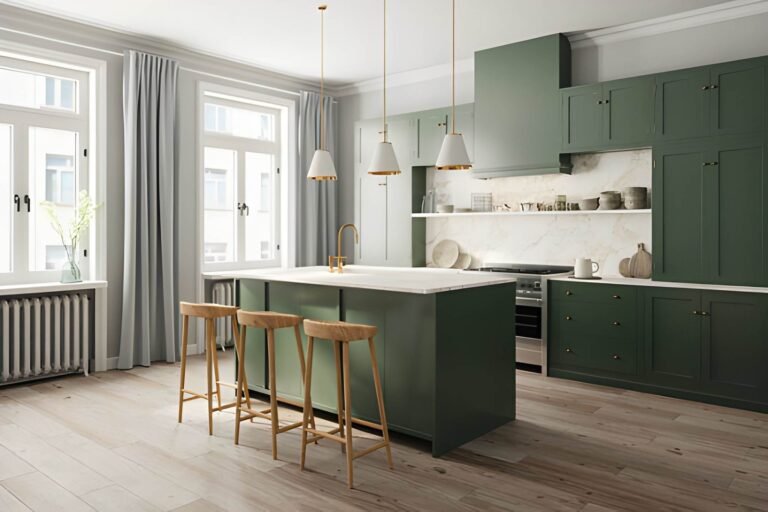
Green is having a real moment, but 2026’s version has moved past the bright, minty sage that saturated design feeds a few years ago. Today’s kitchen greens are deeper, quieter, and more complex: forest green, moss, olive, smoky jade, colors with a gray or brown undertone that keeps them from feeling loud.
According to data from KBIS 2026, green was the most popular non-neutral cabinet color across more than sixty international cabinet brands on the exhibition floor. What makes these greens work is that they function almost like a neutral. A deep forest green island does not fight with the countertops; it anchors the room. Pair it with warm wood shelving, brushed brass pulls, and a marble counter and the result looks considered without trying.
Islands and lower cabinetsFarmhouse kitchensTransitional styles
Keep in mind: Painting every cabinet forest green can get heavy fast. Use it strategically, usually on the island or lowers only.
Terracotta, Rust, and Warm Earth Tones
Terracotta cabinets. Clay-red. Caramel and rust. These colors are showing up in kitchens and looking considerably better than the description might suggest. They work because they tap into something deeply familiar. Earth tones have been in human homes for thousands of years. There is no learning curve; they feel instantly warm and settled in a space in a way that a trendy shade of blue rarely manages.
In kitchens, terracotta works well with handmade tile backsplashes, natural stone countertops, exposed wood beams, and warm lighting. The aesthetic is Mediterranean farmhouse meets modern sensibility. It is a specific look, but if it fits the home, it really fits.
Warm-toned floorsMediterranean aestheticsBohemian interiors
Pair with: Unlacquered brass hardware, matte cement or stone counters, woven pendant lights.
Jewel Tones
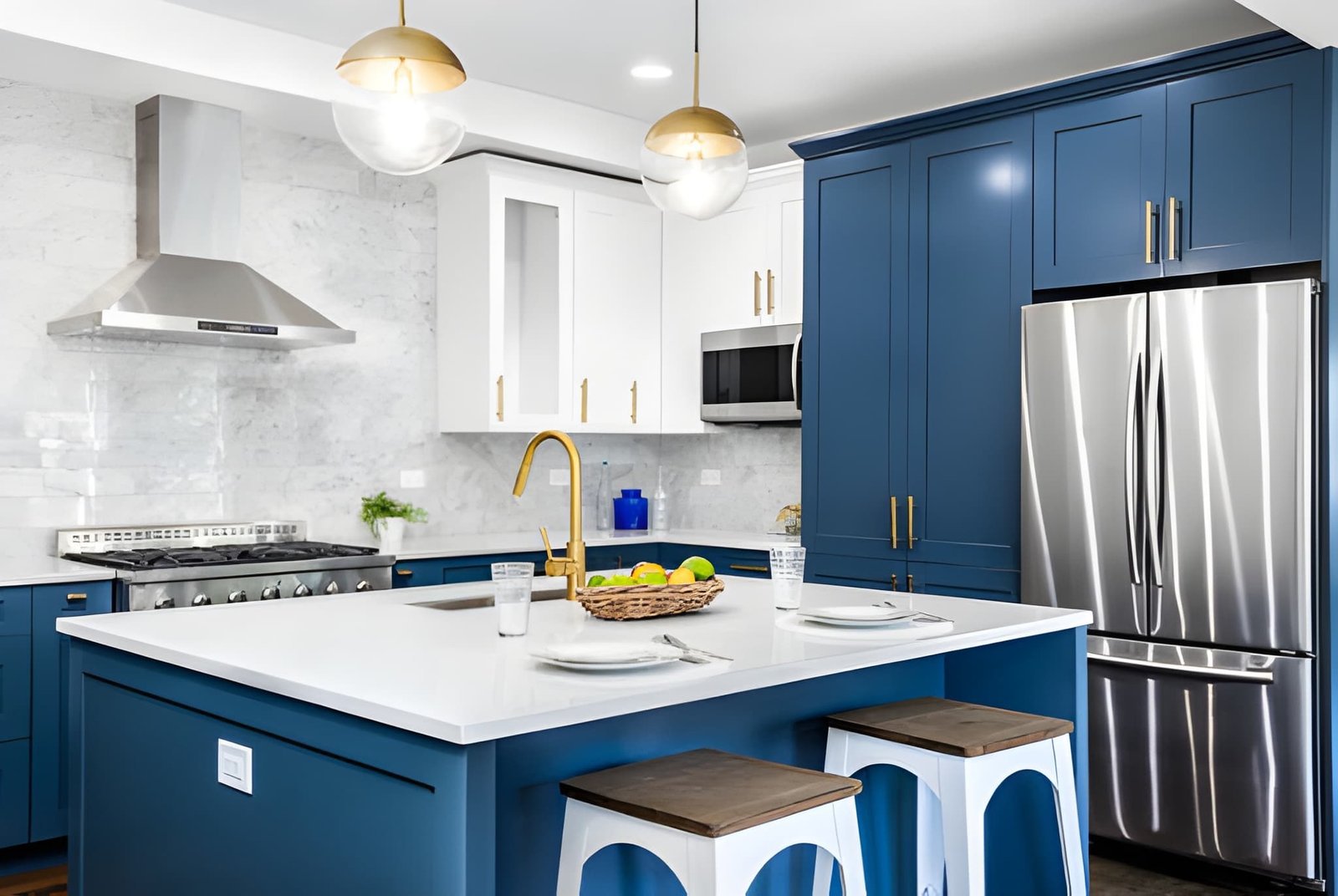
Sapphire blue. Deep burgundy. Oxblood. Rich plum. These are cabinet colors for people who have decided the kitchen should be a showpiece, and who are willing to commit to that decision. The key thing designers are doing with jewel tones in 2026 is restraint in application, not in the choice of color. One hero surface, usually the island or lower cabinets, carries the saturated tone. The rest of the kitchen stays light and calm and lets the statement color breathe.
An inky sapphire island against warm white uppers is dramatic in the best way. A burgundy lower cabinet run with light oak open shelving above stops people. Jewel tones pair with warm metallics: brass, copper, bronze. Never chrome. Chrome cools everything down and fights the richness of these colors.
Larger kitchensEntertaining spacesStatement designs
Non-negotiable: Lighting. Dark cabinets in a poorly lit kitchen look genuinely bad. Plan the lighting before committing to any deeply saturated shade.
Espresso, Matte Black, and the Dark Palette
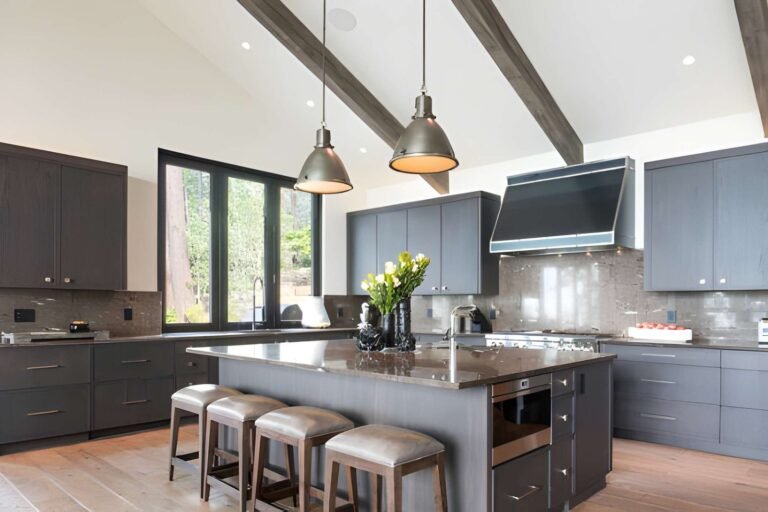
Matte black cabinets have been arriving for a while and in 2026 they have fully arrived. But the more interesting dark option this year is espresso brown. It offers everything matte black does: drama, sophistication, edge, without the starkness. In morning light especially, espresso cabinets have a richness that pure black cannot match.
These work best in modern and contemporary kitchens where there is enough contrast: light countertops, white walls, some warm wood to keep things from feeling closed in. Finish matters more than most people realize. A glossy dark cabinet shows every fingerprint and watermark within days. Matte is the correct choice.
Light Wood and Natural Stains
The single most common trend at KBIS 2026 was not a paint color. It was light wood. Light oak, pale walnut, and unstained maple appeared more frequently than any painted option on the exhibition floor. When you use real wood on cabinets, you get texture, warmth, and craftsmanship that paint cannot replicate. A light oak kitchen looks expensive. It photographs well. It ages well. It does not go out of style the way a specific paint trend can.
White oak in particular has become the material of the moment: clean grain, warm undertone, works with everything from black hardware to brass to stainless. Matte black pulls against light oak is one of those combinations that simply works.
Two-Tone Kitchens
Two-tone cabinets are not new, but how people are using them has grown more considered. The older approach used two contrasting colors on upper and lower cabinets, which can work but can also look forced if not done carefully. The current approach places one bold color on a single focal element, almost always the island, while keeping the rest of the kitchen consistent and calm.
This allows for personality without a full commitment. You can repaint the island in three years if preferences change. Walking back an entire kitchen is a different project entirely. Popular combinations this year include forest green island with warm white perimeter, navy island with light oak, and matte black island with greige or cream.
One rule: Keep the hardware finish the same across both colors. Switching metals between the island and the perimeter reads as indecision, not design.
How to Pair Your Cabinet Color
Warm colors
Greens, earth tones, cream, and wood want warm hardware: brass, unlacquered brass, bronze. Pair with marble, quartzite, or warm stone countertops.
Dark and dramatic
Jewel tones, black, and espresso want bold hardware contrast: matte black, aged brass, or copper. Pair with concrete, honed stone, or light quartz.
Light wood
Matte black hardware gives a modern edge. Warm brass softens toward a Scandinavian feel. Avoid chrome: it fights the warmth of the wood.
Two-tone
Keep hardware finish consistent across both cabinet colors. One metal, applied throughout, makes the contrast look intentional rather than accidental.
Colors That Are on Their Way Out
Cold, blue-toned whites
They read as dated next to warmer materials. If repainting, moving toward a warmer white is almost always the right direction.
Uniform cool gray kitchens
The greige that leans gray has had its moment. If gray is still the preference, make sure it carries a warm undertone.
High-gloss finishes on bold colors
Matte and satin are the finishes of the moment. Gloss amplifies everything, including the fingerprints.
The Advice Worth Keeping
Trends are useful as a starting point. They tell you what the design world has agreed is working right now, which means the colors, products, and contractors are all aligned around them. That coordination has real value when you are making a renovation decision.
But a kitchen you want to spend time in is not built on trend research alone. It is built on understanding the actual space: how light moves through it in the morning, what colors feel calm versus anxious, how the cabinets will sit next to the floors, the walls, and the ceiling height. Those things require looking at your specific kitchen with samples on the actual surface, not at a chip under store lighting.
Pick the color that feels right when you walk in. That is the only measure that holds up over time.

Join the conversation