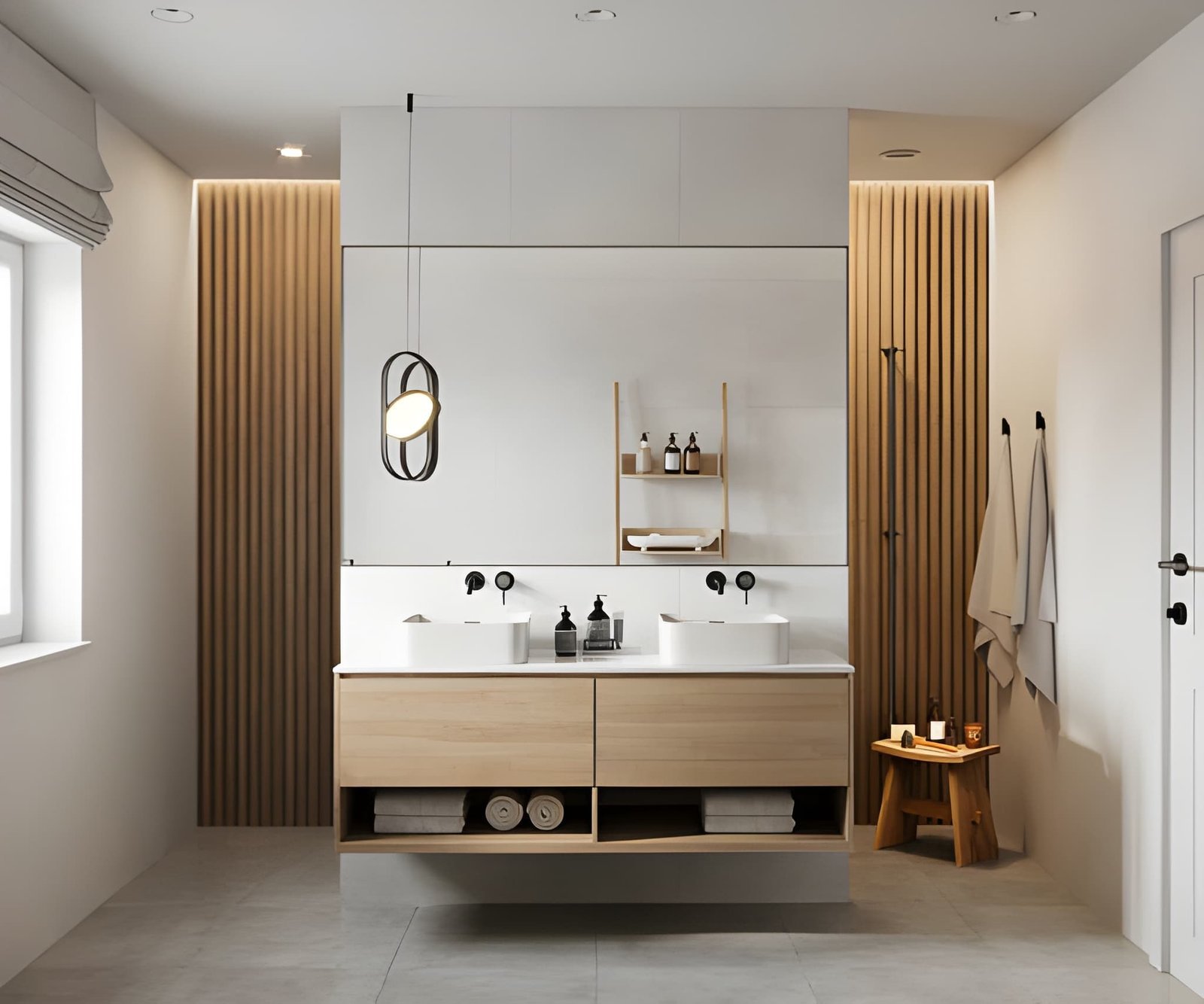
Last spring, my neighbor tore out her outdated vanity bar and replaced it with two small brass pendants on either side of her mirror. Total cost? Under two hundred dollars. The result? Her bathroom looked like it belonged in a design magazine. That’s what pendant lighting does — it takes something ordinary and makes it feel intentional. Curated. Like someone actually thought about it.
If you’ve been thinking about swapping out your bathroom lighting but don’t know where to start, you’re in the right place. We’re going to walk through everything — safety zones, fixture styles, bulb choices, hanging heights, budget tips — the works. No fluff, just the stuff you actually need to know.
Why Everyone Suddenly Wants Pendants in the Bathroom
The Death of the Boring Vanity Bar
Somewhere along the way, bathroom lighting got stuck in a rut. The same chrome bar, the same globe bulbs, the same flat light that made everyone look vaguely exhausted. For a long time, that was just accepted as how bathrooms were lit. Utility over style.
That’s changing fast. People are spending real money on bathrooms now — wet rooms, freestanding tubs, heated floors — and the lighting needs to keep up. Pendant lights bring something a vanity bar just can’t: they draw the eye upward, add shadow and dimension, and make a bathroom feel like an actual room rather than a functional box.
How Bathroom Pendants Differ from Regular Fixtures
Here’s a thing most people skip over until it’s too late — bathroom pendants aren’t just regular pendants hung in a humid space. The steam from showers, the splashing near sinks, the general dampness of a bathroom environment — all of that will destroy a standard fixture over time. Sometimes quickly. Sometimes with sparks.
Fixtures designed for bathrooms are built with moisture-resistant materials and carry something called an IP rating, which tells you exactly how much water exposure they can handle. Ignore this and you’re gambling with both your fixture and your safety. More on IP ratings shortly.
The Zones Nobody Talks About (But Everyone Should Know)
Breaking Down Zones 0 Through 3
Before any light goes up in a bathroom, you need to understand the zone system. These aren’t suggestions — they’re international safety classifications built into electrical codes. Wikipedia’s coverage of bathroom electrical standards does a solid job of laying out the framework if you want the technical deep-dive.
Zone 0 is inside the shower or bathtub itself. Zone 1 is the area above that, up to 2.25 meters off the floor. Zone 2 reaches 0.6 meters past the edge of the tub or shower. Anything beyond that is the dry zone — and that’s where most people have the most flexibility with their pendant choices.
What Wet, Damp, and Dry Zones Actually Mean for You
Think of it in plain terms. Zone 1 is where water is most likely to hit your fixture — steam rises, shower spray drifts, condensation drips. Zone 2 is a buffer — less direct exposure but still moist. The dry zone? That’s your safest bet for a wider range of fixtures.
For Zone 1, you need at minimum an IP65 rating. Zone 2 requires IP44. The dry zone has no mandated IP requirement, though going with IP44 anyway doesn’t hurt. These numbers exist because someone had to learn the hard way.
Finding Your Pendant Style — Which One Fits Your Space?
Style selection is the enjoyable part — though it’s more nuanced than just picking something pretty. The wrong pendant in a small bathroom can make the space feel cluttered. The wrong scale in a large bathroom makes the fixture look lost. You want something that balances with the rest of the room, not just something that looks good in a product photo.
Industrial Styles That Pack a Punch
Cage pendants, Edison bulbs, matte black or aged iron finishes — industrial pendants work best in bathrooms that already have some edge to them. Concrete counters, dark grout, vessel sinks. If your bathroom has a moody, architectural feel, industrial pendants will lean into that rather than fight it.
They’re also surprisingly versatile for smaller spaces. A single cage pendant above a powder room sink adds personality without crowding. Two flanking a narrow mirror can feel like a design-forward choice rather than a space constraint. The rawness of the materials does a lot of heavy lifting.
Glass Globe Pendants — The Crowd Pleaser
Glass globe pendants are the ones you’ll see most often in renovation blogs, and for good reason — they genuinely work almost everywhere. Clear glass keeps things light and airy. Frosted glass diffuses the bulb and reduces shadow, which matters a lot for task lighting at the mirror. Forbes Home’s interior lighting breakdown notes that diffused side lighting near mirrors is consistently ranked as the most flattering and functional option for grooming tasks.
The shape also plays nicely with scale. A large globe over a soaking tub feels sculptural. A smaller globe at shoulder height next to a mirror feels refined. Same basic fixture, wildly different results depending on where and how you hang it.
Rattan and Woven Shades for Texture Lovers
Walk into any coastal or boho-leaning bathroom and there’s a good chance you’ll spot a rattan pendant. These natural material shades cast the kind of light that makes everything look warmer — the woven gaps throw little patterns across the walls that feel genuinely alive in a way solid shades never do.
The catch: rattan is not water-friendly by nature. Unless it’s been sealed or lacquered, moisture will warp and degrade it over time. Stick to dry zones only, and look specifically for pieces that mention moisture-treated finishes. Worth the extra research.
Where to Hang Them and How Low to Go
Placement mistakes are the most common — and fixable — error people make with pendant lighting. Getting the location and height right is honestly most of the battle. A perfect fixture hung wrong still looks wrong.
The Freestanding Tub Setup
A pendant centered over a freestanding tub is one of those design moves that photographs beautifully and lives even better. The key is keeping it high enough to clear the Zone 1 safety threshold — the bottom of the shade must sit at minimum 2.25 meters above the tub’s water line. Check your local code too; some jurisdictions are stricter.
For style, go bigger than you think you need to. A small pendant above a large soaking tub looks timid. A substantial globe or geometric shade creates a proper focal point. The cord or chain length matters too — you want that elegant, intentional drop, not a fixture that looks like it barely made it from ceiling to shade.
Flanking the Mirror Like a Pro
Two pendants on either side of a bathroom mirror might be the single best upgrade you can make for daily use. The side lighting eliminates the unflattering downward shadows that ceiling-mounted fixtures cast, and it creates a more even, natural light across your face — genuinely useful when you’re doing makeup or shaving.
Keep them symmetrical. Match the distance from the mirror edge, the hanging height, and obviously the fixture style. If your mirror has built-in lighting, this setup can complement it or replace it entirely depending on your preference.
Heights, Measurements, and the Rules You Shouldn’t Skip
For mirror-flanking pendants, center the shade at roughly 60 to 65 inches from the finished floor. That’s eye level for most adults — exactly where you want the light source to hit. For general ceiling-hung pendants elsewhere in the bathroom, keep at least 7 feet of clearance from floor to the bottom of the shade. That’s not arbitrary; it’s the standard clearance height that prevents head bumps and keeps the light from feeling oppressive.
Wiring, Safety, and the IP Rating Breakdown
You’ve probably gathered by now that the safety side of bathroom lighting is non-negotiable. Let’s be direct: water and electricity are a genuinely dangerous combination, and the stakes in a bathroom are higher than in most rooms of the house. This is not the place to cut corners or attempt amateur electrical work.
Understanding IP Numbers Without the Confusion
An IP rating is made up of two digits. The first digit (0–6) rates protection against dust and solids. The second digit (0–9) rates protection against water. So IP44 means: protected against solids over 1mm, and protected against water splashing from any direction. IP65 means: fully dustproof, and protected against direct water jets.
For pendant shopping, always confirm the IP rating before you buy. A fixture without one isn’t rated for bathroom use — full stop. Have a licensed electrician handle all installation. In most regions, it’s required by code for wet areas. In every region, it’s simply the smart call.
Picking the Right Bulb for Your Pendant
The fixture brings the style, but the bulb determines how the space actually feels. LED is the only real answer in 2025 — long life, low heat, enormous range of color options. Heat matters more than people realize in bathroom pendants because enclosed shades can trap warmth, and LED keeps that minimal.
Color temperature is where most people make mistakes. Warm white — around 2700K to 3000K — creates the kind of glow that makes a bathroom feel like a retreat. Great for tub-area pendants. Neutral white — 3500K to 4000K — gives you more accurate color rendering, which is what you want at the vanity when you’re trying to match colors or check how your complexion looks. Anything above 5000K starts to feel clinical and cold. Some smart bulbs let you switch between ranges, which is genuinely useful in a bathroom that pulls double duty for relaxing and grooming.
Budget and Shopping — What to Spend and Where
Bathroom pendant lighting sits at every price point imaginable, from thirty-dollar basics at big box stores to several-hundred-dollar statement pieces from specialty retailers. The honest advice: spend more on the fixtures in the spots where you’ll spend time looking at them — above the vanity, over the tub — and be more budget-conscious with accent or hallway-adjacent pieces.
Mid-range options from West Elm, IKEA, and CB2 hit a sweet spot of design quality and price. For something more unique — handblown glass, hand-forged iron, custom woven rattan — Etsy has a genuinely impressive selection from independent makers. If you’re doing a full renovation and want everything cohesive, Visual Comfort and Restoration Hardware carry collections where you can match pendants to other fixture finishes throughout the space.
One thing: always buy pendants with adjustable cords or drop rods. Installation goes sideways fast when the ceiling height doesn’t match what the product page assumed. Adjustability saves headaches.
Wrapping It Up
Bathroom hanging pendant lighting is one of those upgrades that looks like a big change but is actually very achievable. You don’t need to gut your bathroom or call in a designer. You need to know your zones, match your IP ratings, think through your hanging height, pick a style that actually fits your space, and choose the right bulb for how you use the room.
Do those things and you’ll end up with a bathroom that feels completely different — not because you spent a fortune, but because you made deliberate choices. That’s the thing about good lighting. It’s quiet, but you notice it every single time you walk in the room.
FAQs
1. Can any pendant light be used in a bathroom?
No — only fixtures with appropriate IP ratings for the specific zone where they’ll be installed. Standard pendants without IP ratings belong in dry zones only, far from any direct water exposure. Near showers or tubs, you need IP44 minimum for Zone 2, and IP65 for Zone 1. Always verify before purchasing.
2. What’s the minimum hanging height for a pendant over a bathtub?
The bottom of the shade must be at least 2.25 meters above the water surface in the tub, per standard electrical safety classifications. Some local codes set a higher clearance threshold, so always check your regional regulations and confirm with your electrician before installation.
3. Which bulb color temperature works best for bathroom pendants?
It depends on placement. Vanity-side pendants do best with neutral white in the 3500K–4000K range for accurate color rendering during grooming. Pendants near the tub or in relaxation areas suit warm white at 2700K–3000K. Smart LED bulbs with adjustable color temperature give you the flexibility to use one fixture for both purposes.
4. How many pendants should a bathroom have?
There’s no fixed number — it depends on your bathroom’s size and layout. Two flanking a vanity mirror is a common and highly functional setup. One centered above a freestanding tub works well as a focal point. Larger bathrooms often layer pendants with recessed lighting for a balanced, multi-functional result.
5. Is pendant lighting a safe choice for kids’ bathrooms?
Yes, when done correctly. Use enclosed, shatter-resistant shades rather than open or delicate glass designs. Install at heights children cannot reach. Ensure proper IP ratings for the relevant zones, and always use professional installation. LED bulbs are the safest choice because they run significantly cooler than older incandescent or halogen options.

Join the conversation