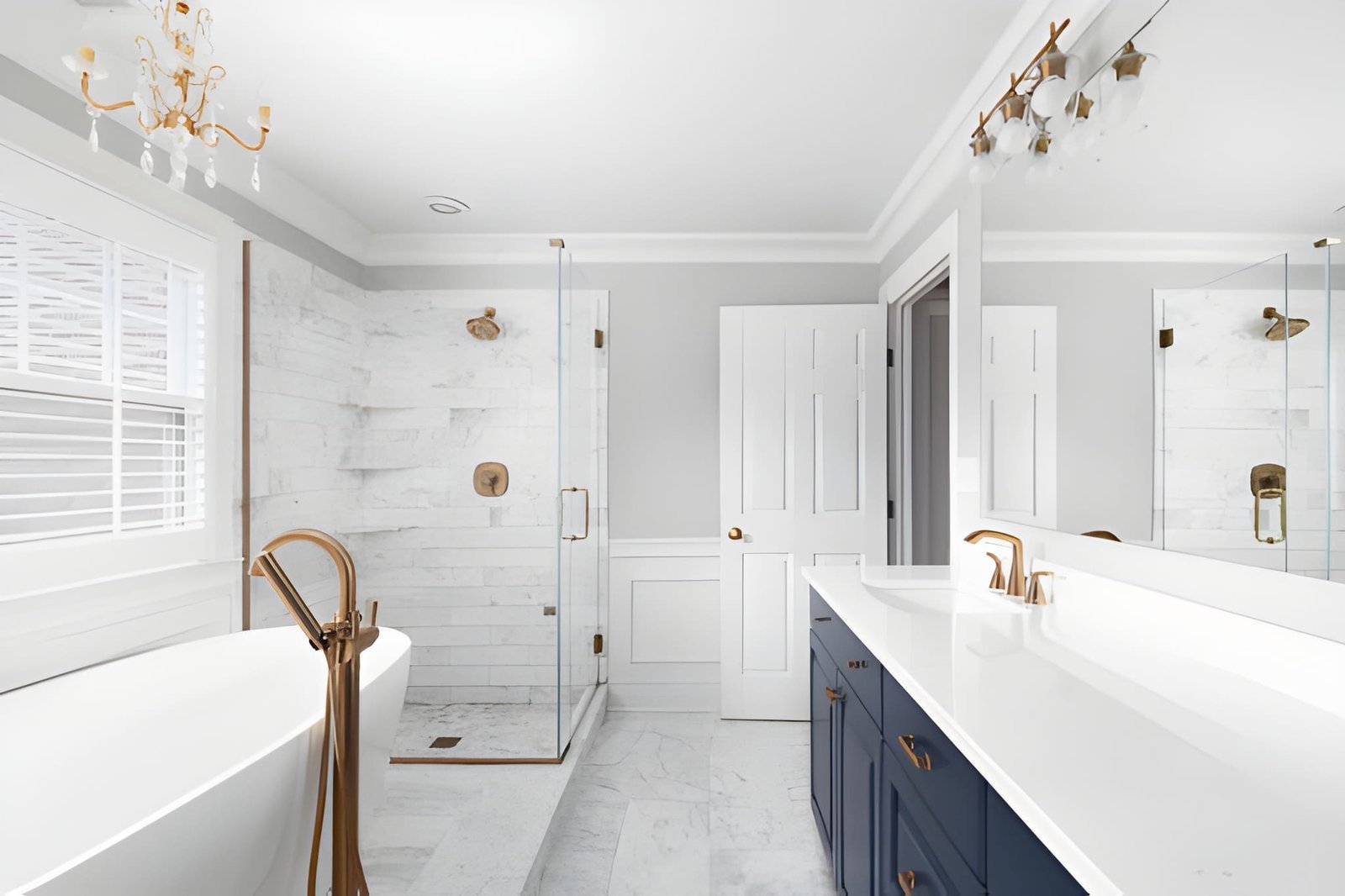
“How much is this actually going to cost me?” I hear that question all the time, and honestly, it’s the right one to ask first. If you’re standing in your outdated 5×10 bathroom right now, you already know the feeling. Worn out vanity, grout that’s seen better decades, a shower door that squeaks like it’s auditioning for a horror movie. You want it fixed. You just don’t want to open the final bill and end up sitting on the tile floor in shock.
Here’s the reassuring part. A 5×10 bathroom, 50 square feet if you’re doing the math, happens to be one of the easier rooms to budget for. It’s common enough that contractors have seen the same layout a hundred times, which means fewer unknowns. So let’s actually walk through where the money goes, what things cost in 2026, and which expenses tend to sneak up on people.
Why 5×10 Is Such a Common Bathroom Size
There’s a reason so many homes have this exact footprint. It’s roomy enough for a toilet, a vanity, and a tub shower combo, but not so big that changing anything means tearing the whole layout apart. I like to think of it as the medium coffee of bathroom sizes: nothing about it feels cramped, but it’s also not asking for its own zip code.
Average 5×10 Bathroom Remodel Cost in 2026
Most estimates put a 5×10 remodel somewhere between $6,000 and $15,000 in 2026. A lot of homeowners end up around $12,000 once everything is said and done, mostly because a few “small” decisions along the way add up faster than expected. Where you land in that range really comes down to three things: the finishes you pick, where you live, and whether you’re keeping the existing layout or moving things around.
Budget, Mid-Range, and Luxury Price Tiers
Not everyone needs the same level of remodel, so it helps to think in tiers.
At the budget end, somewhere around $6,000 to $9,000, you’re mostly looking at cosmetic changes. New paint, updated fixtures, a new toilet, better lighting. The layout stays exactly where it is.
Bump up to mid-range, roughly $9,000 to $16,500, and now you’re talking new tile, an updated vanity, maybe converting the tub to a shower, and some minor plumbing work along the way.
Then there’s the luxury tier, $16,500 and up, sometimes well past $30,000. This is custom tile, a full walk-in shower conversion, heated floors, and fixtures that cost more than some people’s monthly mortgage payment.
Cost Breakdown by Fixture and Feature
A “bathroom remodel” isn’t really one expense. It’s a stack of smaller decisions, each with its own price tag. Here’s how those usually shake out.
Toilet Replacement Costs
A standard toilet with installation lands around $150 to $600. If you want a smart toilet, bidet features, heated seat, the auto-flush thing, expect to pay $1,000 to $3,000, sometimes more.
Vanity and Sink Costs
Stock vanities are the cheapest route at $300 to $900. Go semi-custom and you’re in the $500 to $1,600 range. Fully custom built-ins start around $3,000, and honestly, they can climb well past $6,000 once you get into nicer materials.
Tub, Shower, and Walk-In Conversion Costs
Keeping your existing tub-shower combo is the budget-friendly move here. But if you want to switch to a walk-in shower, with new tile and updated drainage, plan on that adding $5,000 to $10,000 to the total.
Why Walk-In Showers Cost More Upfront
Here’s the thing about walk-in conversions: the floor usually needs re-sloping for proper drainage, there’s a waterproof membrane to install, and sometimes the plumbing has to move too. It’s kind of like renovating the foundation of a smaller room inside your bathroom. Looks simple, isn’t.
Flooring and Tile Costs
Materials alone run $500 to $2,000. Ceramic tile for walls or showers is usually $5 to $15 per square foot installed, and if you go all in on a wet area with mosaic accents, that number can creep toward $3,000.
Labor Costs You Should Expect
This one catches a lot of first-timers off guard: labor usually eats up 40% to 60% of the whole budget. So on a $12,000 project, something like $5,000 to $7,000 of that is just paying people for their time, not materials.
Plumbing and Electrical Work
Plumbers typically charge $75 to $150 an hour. Electricians are a bit less, usually $25 to $40 an hour, though in some regions that climbs to $130. And if you’re moving a toilet, sink, or shower even a few feet from where it currently sits, tack on another $1,000 to $5,000 just for that plumbing work.
Hidden Costs That Catch Homeowners Off Guard
I really wish more people read this part before they sign a contract, because this is where the budget quietly gets away from you.
Water Damage and Subfloor Repair
Bathrooms are good at hiding problems. A contractor pulls up what looked like a slightly soft spot in the floor, and suddenly there’s a subfloor that’s been rotting away from years of a slow leak nobody noticed. That kind of repair can add another $2,000 to $5,000, and it usually shows up after you’ve already committed to the project.
If you’re noticing musty smells or discoloration before you even start, it’s worth checking our guide on how to clean mold off a bathroom ceiling first. Mold is often the early warning sign for exactly this kind of moisture damage.
Permit and Inspection Fees
Most cities want a permit for plumbing, electrical, or structural work, and that usually runs $200 to $1,500 depending on where you live. It’s tempting to skip this to save a bit of money, but if you ever sell the house, it’s rarely worth the risk.
What Drives Your Total Cost Up or Down
A few things really move the needle here. Keeping the plumbing where it already is, instead of relocating the toilet or shower, can save you up to 30% right off the bat. What you choose for materials matters a lot too. Natural stone and custom tile are going to cost noticeably more than something like luxury vinyl plank or plain ceramic.
Where you live plays a role as well. Labor in cities tends to run 10% to 20% higher than in rural or suburban areas. And older homes tend to need extra waterproofing that a newer build just doesn’t require.
Ways to Save Without Sacrificing Style
If your plumbing is already in a good spot, leave it there. That alone is one of the biggest money savers on this whole list.
Beyond that, it’s really about picking your battles. Splurge on one or two things you’ll actually look at every day, a statement mirror, a bold tile accent, and keep everything else simple. Large-format tile also helps since fewer grout lines means less labor. If your cabinets are still structurally fine, refinishing or refacing them beats buying a whole new vanity. And don’t skip getting at least three contractor quotes. Prices vary more than people expect.
Once the remodel wraps up, good lighting genuinely changes how the whole room feels. We’ve got a bathroom pendant lighting guide if you want ideas that pair well with a fresh renovation.
Is a 5×10 Bathroom Remodel Worth the Investment?
Generally, yes. A mid-range remodel in this size typically returns 60% to 70% of what you spent when you sell the house, which puts it among the safer bets in home improvement. But there’s also a payoff that doesn’t show up on a spreadsheet: not cringing every time you walk into your own bathroom is worth something too.
Conclusion
None of this has to be a mystery. Most people land somewhere between $6,000 for a light refresh and $15,000 or more for something fuller, and labor eats up close to half of whatever that number ends up being. The trick is getting ahead of the surprises instead of reacting to them. Check for water damage before you start, get more than one quote, and pick just one or two things worth splurging on. Do that much, and this stays an exciting project instead of turning into a budget nightmare.
Frequently Asked Questions
1. What is the average cost to remodel a 5×10 bathroom?
Somewhere between $6,000 and $15,000 in 2026 for most people, with a lot of mid-range projects landing around $12,000 once you add up labor and materials.
2. Is it cheaper to keep my bathroom’s existing layout?
Yes, and it’s not a small difference either. Keeping your current plumbing and layout can save up to 30% compared to moving the toilet, sink, or shower somewhere new.
3. How much does labor cost in a bathroom remodel?
Usually 40% to 60% of the total budget. That covers plumbing, electrical, tiling, and the general contracting work holding it all together.
4. What hidden costs should I budget extra for?
Leave room for a 10% to 20% contingency. Subfloor damage, old wiring, and outdated plumbing have a habit of showing up right after the walls come open.
5. Does a 5×10 bathroom remodel increase home value?
Usually, yes. A well-done mid-range remodel tends to recoup 60% to 70% of its cost at resale, which is a better return than most renovation projects offer.

Join the conversation