Bad lighting is one of those things almost every office just puts up with. Glare on the monitor by 2 p.m. One person pulls the blind halfway down, another says it’s too dark, a third wants it wide open. Sound familiar? A lot of that comes down to the blinds, or to not having the right ones in the first place.
Below, we go through the main types (there are six really worth knowing), what each one does well, and a few things to check before you buy. Nothing fancy. Just what tends to work in an ordinary workplace, whether that’s a small studio with two desks or a floor with forty.
Why blinds matter more than you think
Blinds aren’t only decor. They control light, heat and privacy all at the same time, which is a lot to ask of one piece of fabric. The U.S. Department of Energy says window coverings can reduce unwanted heat gain and help lower cooling costs. So if your afternoon sun is brutal, the right blind takes some of the load off the air conditioning. Over a whole summer that’s real money.
Comfort counts too. Glare strains the eyes and brings on headaches, which is why OSHA treats lighting as part of a well-designed workstation. You don’t need a big, expensive fix for it. A set of decent blinds does most of the work, and they’re one of the quicker upgrades you can make.
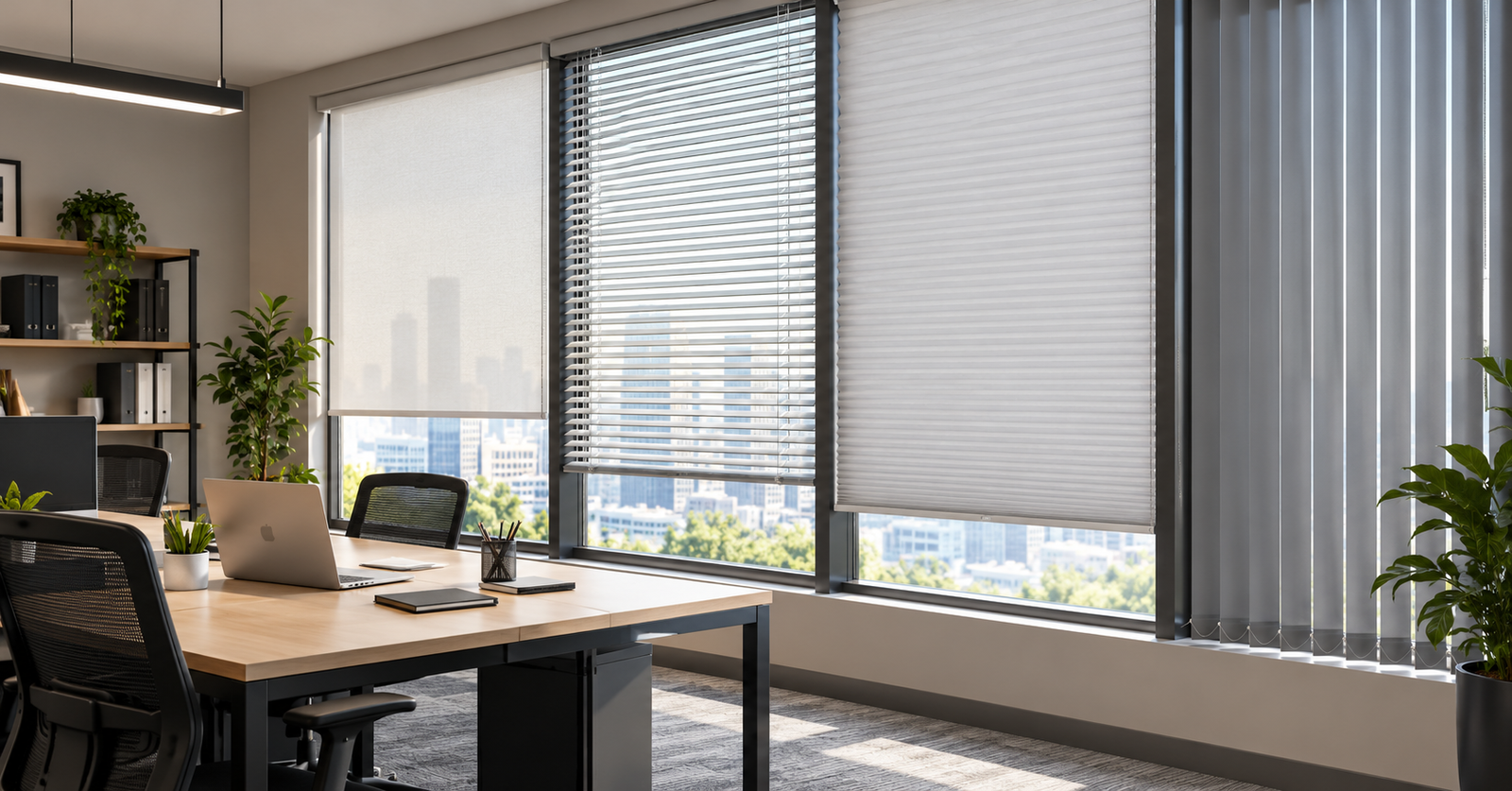
Roller blinds
For most offices, start here. Roller blinds are simple. You pull a chain, the fabric goes up or down, and that’s the end of it. They look neat and fit with nearly any style of office, from plain white walls to something a bit more designed.
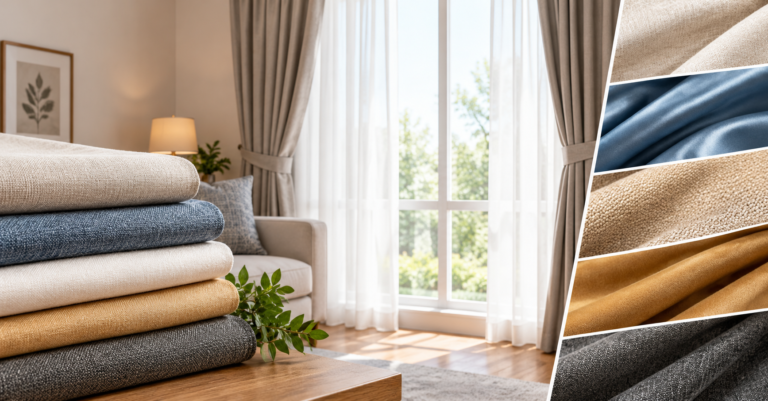
The fabric is the big decision. Sheer or light-filtering? You can still see out and the sun gets softer, which is good for open-plan areas. Blackout or thick? Better for meeting rooms, where the projector screen has to be readable at four in the afternoon. Solar screen fabrics often list an openness number, and a lower number means less light gets through. Dust doesn’t cling to them much, so a quick wipe now and then is plenty.
Vertical blinds
They’ve got a dated reputation, sure. But on wide windows or sliding glass doors they’re hard to beat. The slats turn, so you can point the light where you want it instead of blocking all of it, and one track covers a huge opening with no fuss.
Corner offices and reception areas with lots of glass suit them well. Check the material first, though. Fabric slats look softer and more modern. PVC slats wipe clean easily and put up with people brushing past them all day, which matters more than you’d think in a busy front area.
Venetian and mini blinds
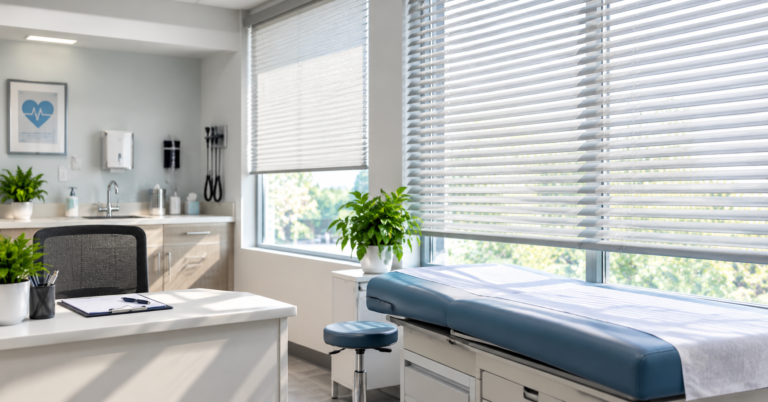
These are the classic horizontal slats. Aluminum ones are cheap and tough, so you see them all over shared spaces. Wood or faux wood feels warmer, and it tends to turn up in a manager’s office or near reception, where looks matter a little more.
The big plus is control. Tilt the slats up and the light bounces toward the ceiling, so the room gets brighter and no screen takes a direct hit. Tilt them down for privacy and a bit of daylight still gets in. It’s hard to get that kind of fine adjustment from most other types.
A tip: pick faux wood near kitchenettes or break areas. Real wood doesn’t love humidity and can warp after a while, and nobody wants to replace blinds twice.
Cellular or honeycomb shades
These have small air pockets in the fabric that work like insulation. So if your heating and cooling bills keep creeping up, give them a look. They also take a bit of noise out of the room, which is handy if you’re near a busy road. The ENERGY STAR program has more background on how window attachments help with efficiency.
The downsides? They cost more than basic blinds, and a coffee spill on the fabric is a pain to clean. Still, in rooms that run really hot or really cold, they often pay for themselves within a few seasons.
Motorized and smart blinds
You don’t need these in a small office. But if there’s a long row of windows, they save a lot of time. One remote or one app runs the lot, and you can schedule them to follow the sun through the day. They all end up at the same height as well, which looks so much tidier than a row of blinds at random levels.
Boardrooms like them too. Tap once, the blinds drop, the presentation starts. Take a look at our home vision hub collection to compare styles and see which ones suit a commercial setup.
Things to check before you buy
Which way do your windows face? South and west get the harshest light, so they usually want a darker or more solid fabric. North-facing rooms can manage with something lighter, since the light there is calmer and doesn’t swing as much through the day.
What’s the room for? A conference room needs better light blocking than an open workspace. A private office might want privacy first and the view second. The reception has to look good from the street as well as from the inside, so think about both sides of the glass.
Then budget. Aluminum venetians sit at the cheap end, cellular and motorized shades at the expensive end, with rollers and verticals somewhere in between. It’s worth spending more on the windows that cause the most trouble and going cheaper on the rest.
Safety gets skipped a lot. If kids visit your office, or you share the building with other businesses, cordless blinds are the better choice. The U.S. Consumer Product Safety Commission has clear guidance on window covering cord safety, and going cordless removes the issue altogether. It looks cleaner too.
And upkeep. Fabric blinds can usually be spot cleaned. Aluminum wipes down in seconds. Wood needs a gentler hand and a dry cloth. Be honest about what your team will actually do, because a blind that’s a pain to clean gets ignored until it looks awful.
A word on daylight
Lots of people try to block every last ray and end up with a gloomy room and the lights on at noon. That defeats the point. Natural light helps people stay alert, and the Whole Building Design Guide explains how daylighting improves indoor spaces when it’s done well.
So think control, not darkness. Light-filtering fabrics or tilting slats let the brightness in and take the harsh edge off. You keep what’s good about the window, and nobody has to squint at an email to read it.
Quick picks by room
Open workspace: roller shades in a light-filtering fabric. They keep the room bright and the screens readable. Meeting room: blackout rollers or cellular shades, so it can go properly dim when it needs to.
Manager’s office: faux wood blinds, which look polished and give good control over the angle of the light. Big glass walls: vertical blinds or motorized shades, so there are no gaps. And if lower energy bills matter most, put cellular shades first on the list.
Final thoughts
There isn’t one perfect blind. The best ones are whatever suits your light, your layout and your budget. Start with the windows that cause the most trouble, fix those first, and give it a week or two. You’ll know soon enough whether it worked.

Join the conversation