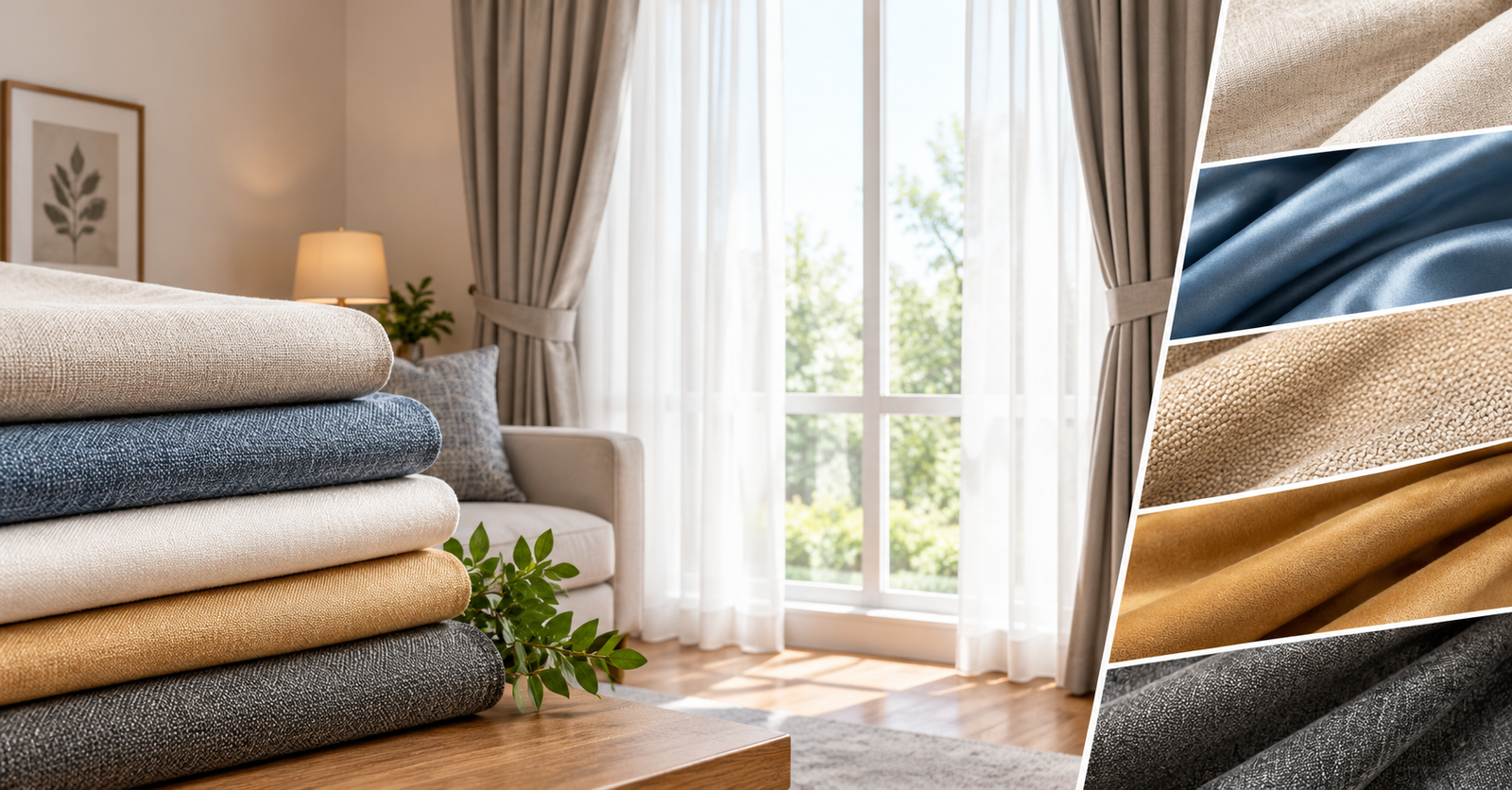
Short answer? It depends on the room. Longer answer, below.
I’ve heard people argue about this for years. One friend won’t hang anything but linen. Another has velvet in every bedroom because her flat sits right on a busy road. Neither is wrong. A fabric that’s perfect in a sunny lounge can be a headache in a damp kitchen.
Here’s where I land. Linen and cotton suit most living rooms. Velvet and wool are worth it if the room is cold or noisy. Polyester blends are what you buy when the budget says no to everything else, and honestly they’re not bad.
Curtains do a lot more than cover glass. They cut glare, stop people looking in, soften street noise, and make a room feel a bit warmer in winter. What they’re made of decides how well they do all that, and whether they still look good after a year of sun and washing.
I’ll go through each fabric, then give you a quick table by room. If you’re redoing the whole space, Home Vision Hub has more ideas to go with it.
What to Consider Before Choosing Curtain Fabric
Don’t pick the color yet. First, what’s actually bothering you about that window?
Sun in your eyes at 6 a.m.? Neighbors who can see your sofa at night? A cold draft every time the wind picks up? Each one points somewhere different.
Sheers trip people up here. They feel private in the day, but switch a lamp on and everyone outside gets a free show. For privacy or drafts, go thick and tightly woven.
Sun matters too (more than most people think). A south-facing window can fade cotton or silk in two summers. Polyester barely notices. Then there’s washing. Can you throw it in the machine, or is it a dry-clean job every time? If you’ve got kids or a dog, that question matters a lot.
And drape. Heavy fabric hangs in thick, steady folds. Light fabric floats about. Pick the look you like.
Cotton and Linen: Natural Everyday Fabrics
Cotton is the one most of us end up with. It’s soft, cheap and comes in every color you can imagine. Most cotton curtains survive the washing machine, which helps the day somebody spills juice on them. But it creases, hot water can shrink it, and strong sun fades it. A lining fixes most of that. It’s a good fit for living rooms, kitchens and kids’ rooms.
Linen feels different. It comes from flax, it’s a bit rough and uneven, and it gives that easy, slightly messy look you see in coastal and Scandinavian homes. Air moves through it and harsh light turns soft. It wrinkles, and yes, some people hate that. I think it’s half the charm. It costs more than cotton, and unlined it can hang limp and show everything behind it.
Can’t decide? A cotton-linen blend wrinkles less than pure linen and costs less too. If I had to pick one fabric for almost any room, it’d be lined cotton or a blend.
Velvet, Silk and Wool: Luxury and Warmth
Velvet makes a room feel wrapped up. The thick pile blocks drafts, swallows sound and darkens the space, so it’s great in bedrooms, home cinemas and cold living rooms. The downside is upkeep. It grabs dust and pet hair, marks show where hands have touched it, and it usually needs dry cleaning. It’s heavy too, so check your rod first.
Silk looks amazing and asks a lot in return. That sheen and flowing drape is hard to copy, which is why it turns up in formal dining rooms. But sunlight wears it down, water leaves spots, and the price stings. If you love it, line it and keep it away from direct sun. Or get a silk-look polyester and stop worrying.
Wool is the quiet one. It insulates well, resists creases and keeps its shape for years. It suits old houses and cold places, but it’s expensive and needs careful cleaning.
So: velvet for warmth and sound, silk for showpiece rooms with little sun, wool if you want something that lasts.
Polyester and Blends: Durable and Budget-Friendly
Polyester gets a bad name, and the cheap stuff earns it. It can look shiny, feel stiff and cling to dust. A good one is different. It hardly fades, hardly wrinkles, dries fast and doesn’t mind the washing machine. Some newer weaves look like linen or velvet from a couple of feet away.
The real problem is comfort. It holds heat more than natural fibers, so it feels less airy.
Blends help. Cotton-polyester keeps the soft look but adds strength and cuts the ironing. Linen-polyester lowers the price and keeps the drape. Renting? Got a window that bakes all afternoon? A toddler and a cat at home? A decent blend makes sense.
Sheer, Blackout and Thermal Curtains: Functional Choices
These are named for the job, not the fiber. Most are made from the fabrics above with a special weave or lining.
Sheer curtains, usually voile or thin linen, scatter daylight and give some privacy by day. They do almost nothing for insulation, and after dark they hide very little. Hang them behind a heavier pair and you get both.
Blackout curtains use a tight weave or a foam backing to block nearly all light. Good if you work nights, have a baby who naps at noon, or just hate dawn. They also cut glare on a TV or monitor.
Thermal curtains have a dense layer that slows heat moving through the glass. That helps in winter and summer, and it can ease your energy bill a little. The U.S. Department of Energy has a handy page on how window treatments affect heat loss and gain if you want the details. Many thermal curtains are blackout too, so one curtain does two jobs.
When you shop, check that the lining is properly stitched in, and that the curtain is wide enough to overlap the frame. Gaps at the sides let in light and drafts, and no fabric can fix that.
Best Curtain Material by Room
Every room gets used differently. Here’s how it breaks down:
| Room | Best material | Why |
| Living room | Lined cotton, linen or a cotton-linen blend | Soft light, easy care, suits most styles |
| Bedroom | Velvet or blackout-lined polyester | Blocks light and noise, adds warmth |
| Kitchen | Cotton or polyester | Washes easily and copes with steam and grease |
| Kids’ room | Polyester blend or washable cotton | Durable, stain-resistant, simple to clean |
| Dining room | Lined silk or silk-look polyester | Elegant drape with less fading risk |
| Home office | Sheer plus light-filtering linen | Cuts screen glare without darkening the room |
How to Make Curtains Last Longer
A little care goes a long way, whatever you buy.
Read the care label first. Lots of curtains want a cold, gentle wash, and one hot cycle can shrink a good pair. Vacuum or shake them out every few weeks, especially velvet and wool, since dust builds up faster than you’d think. A lining takes the sun’s damage instead of the main fabric, which can add years. Iron or steam cotton and linen while still a bit damp, and keep the iron cool on polyester. Silk, velvet and wool usually go to the dry cleaner unless the label says otherwise. If one curtain gets more sun than its partner, swap them now and then so they fade evenly.
Final Verdict: What Is the Best Material for Curtains?
For most homes, lined cotton or a cotton-linen blend is the best all-round pick. It’s affordable, it breathes, it’s easy to look after and it suits almost any room. If warmth and quiet matter more, go with velvet or wool. If you need something tough and cheap, a polyester blend is the answer. And if light control is the goal, add sheer or blackout layers.




Join the conversation