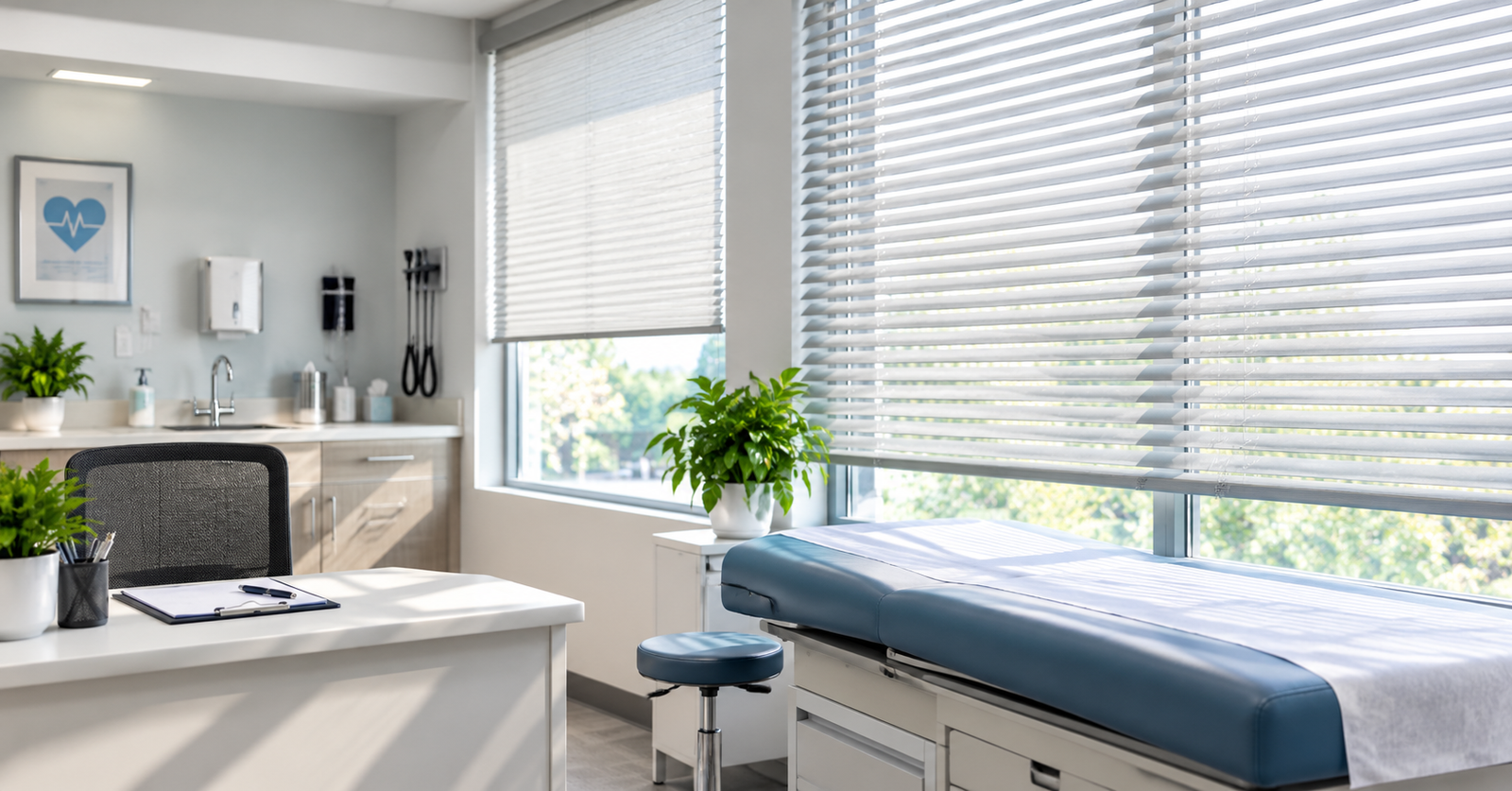
Walk into any clinic and the windows are the first thing you notice, before the furniture or the paint. Bare glass looks cold. Heavy curtains look dusty. Blinds are the sensible middle ground, and the right ones deal with privacy, light, cleaning and comfort all at once.
The catch is that “blinds” covers a lot of ground. A waiting room has different needs from an exam room, and a dental office isn’t the same as a physio studio. So let’s go through the options one by one.
Why Blinds Matter More in a Clinic Than in an Office
In a regular office, blinds mostly stop glare on a computer screen. In a clinic they’re doing a lot more than that.
Patients are often nervous, in pain, or half-dressed behind a thin curtain, and they want to know nobody outside can see in. Staff, on the other hand, need decent light to examine people. The room still has to feel calm rather than clinical, and on top of all that there’s infection control. A window covering ends up being part of how the place runs.
The best blind does all of this without anyone noticing it’s there.
Roller Blinds: The Safe, Practical Choice
If I had to pick one type for most clinics, it’d be roller blinds. They’re flat, simple and easy on the eye. No slats to collect dust, no folds where grime can sit.
You’ll mainly be choosing between three fabrics:
- Blackout fabric blocks almost all light. Use it in ultrasound rooms or any treatment room with lasers or projectors. If you also want to compare fabric curtains for staff rest areas, our guide to blackout curtains for the bedroom is a handy read.
- Light-filtering fabric lets daylight in but softens it, and people outside can’t see in. This is the one for waiting areas and consultation rooms.
- Sunscreen fabric cuts glare and heat but keeps a bit of the view. Good for big windows that get strong afternoon sun.
Cost is a big plus too. Rollers are usually among the cheapest options, and that adds up fast when you’re covering a dozen windows.
Venetian Blinds: Good Control, but Think About Cleaning
Venetian blinds, the classic horizontal slats, give you very fine control. Tilt the slats up and light bounces toward the ceiling; tilt them down for full privacy. In a consultation room where the light changes through the day, that’s handy.
Cleaning is the problem. Slats collect dust, and wiping them one by one takes forever. If you go this way, pick aluminium or PVC over wood, since they wipe clean fast and won’t warp from humidity. Wider slats are easier to clean than thin micro-slats too.
My view: in a hygiene-sensitive space, keep venetians for offices, corridors and staff areas, and leave them out of the exam rooms.
Vertical Blinds for Large Windows and Glass Doors
Reception areas often have wide glass walls or sliding doors, and vertical blinds suit those better than almost anything else. They slide sideways, cover long spans, and the vanes rotate to control light.
For a clinic, go with PVC or a wipeable fabric and avoid anything that soaks up smells or stains. Check the track and the pull cord as well, because front desks get knocked about a lot.
Zebra and Dual Blinds: A Modern Middle Ground
Zebra blinds, also sold as day-and-night blinds, alternate bands of sheer and solid fabric. Slide them one way for filtered light. Slide them the other way and the solid bands line up for more privacy.
They look softer than a plain roller, which helps if you want a clinic that feels friendly rather than institutional. Pediatric and cosmetic practices tend to like them for that reason. If you’d like to mix in real curtains for a lounge-style waiting area, this guide to the best curtains for the living room compares sheer and light-filtering styles. Whatever you pick, make sure it wipes clean, because textured versions hold dust.
Materials That Make Sense for Healthcare
Fabric is where a lot of clinics go wrong. Something that looks great in the showroom can turn into a headache six months later.
Here’s what to look for:
- A surface you can wipe. A damp cloth and a mild disinfectant shouldn’t ruin the color. The CDC’s environmental infection control guidelines are worth a skim for how healthcare spaces approach surface cleaning.
- Antimicrobial treatment. Many makers sell fabrics treated to resist bacteria and mold. It doesn’t replace cleaning, but it helps.
- A fire rating. Commercial buildings usually need fabrics that meet local fire rules, and in the US that often means testing to NFPA 701. Ask your supplier for the certificate.
- Fade-resistant color. Reception areas get a lot of sun, and cheap fabric fades unevenly.
- Moisture resistance. This matters near sinks, in dental clinics, or anywhere humid.
PVC, polyester and coated fabrics usually tick most of those boxes.
Choosing Blinds Room by Room
Instead of using one style everywhere, think about what each space needs.
- Waiting room: light-filtering rollers or zebra blinds. You want daylight and a calm feel without people on the street staring in.
- Reception: vertical blinds or sunscreen rollers, especially if the glass is big or faces the sun.
- Consultation and exam rooms: blackout or high-privacy light-filtering rollers. Patients need to feel fully private, and the doctor should be able to dim the room.
- Procedure and imaging rooms: blackout, ideally with side channels so light doesn’t creep in around the edges.
- Staff rooms and offices: venetian or standard rollers. Lower stakes, so pick by budget and comfort.
- Pediatric areas: cordless or motorized in soft, cheerful colors, kept well away from anything a child could pull.
Safety: Go Cordless Where You Can
Dangling cords are a real hazard, especially around small children and elderly patients. The US Consumer Product Safety Commission says cordless window coverings are the only way to remove the strangulation risk, and its window covering cords page is worth reading before you buy.
Cordless lifts, spring-assisted rollers and motorized blinds all solve it. To spot safer products quickly, look for the Window Covering Safety Council’s Best for Kids label, which marks cordless and inaccessible-cord options. Motorized systems cost more up front, but they pay off in a clinic: staff don’t have to lean over furniture, and nobody has to touch the blind, which is a small hygiene win.
Privacy Without Making the Room Feel Dark
Here’s the balancing act. Patients want privacy, but nobody wants to sit in a gloomy room waiting for results.
Light-filtering fabric solves most of it. It scatters daylight so the room stays bright, yet blurs shapes from outside. Check the openness factor: a lower percentage means more privacy. Around 1 to 3 percent suits most exam rooms, and 5 percent can work in a waiting area where a bit of view is welcome.
Don’t forget ground-floor rooms. If you face a busy road or a shared courtyard, go for more privacy than you think you need. At night, with the lights on inside, thin fabric can turn see-through from the street.
Colors and Mood
Color changes how a space feels. Soft neutrals work best in most clinics: white, cream, light grey, pale blue, muted green. They look clean and calm, and they don’t fight with medical equipment or your branding.
Skip very dark colors in small rooms, since they make the space feel heavy. Bold patterns can be fun in a kids’ clinic, but anywhere else they get tiring fast. If you want some personality, put it in the accents and keep the blinds quiet.
Cleaning and Upkeep
Even good blinds need a bit of care. A simple routine is enough:
- Dust weekly with a microfiber cloth or a vacuum brush.
- Wipe roller and vertical blinds with a damp cloth every month, or more often near busy doors.
- Spot-clean marks right away, because stains set faster than you’d think.
- Look over the mechanisms every few months for loose fittings or sticking chains.
Buy decent blinds in the first place and this takes almost no time. For more everyday routines, the cleaning and maintenance hacks section on Home Vision Hub has plenty of ideas.
Budget: Where to Spend and Where to Save
A clinic isn’t the place to hunt for the cheapest blinds. Replacing flimsy ones after a year costs more than buying decent ones now. You don’t need top-of-the-range everything, though.
Spend on the exam rooms and reception, because that’s what patients actually see, and spend on safety features like cordless systems. Save on back offices and storerooms, where simple rollers are fine.
Get a few quotes and ask for fabric samples. Hold them against the window at different times of day, since color and see-through-ness change a lot with the light.
Final Thoughts
There’s no single best blind for every clinic. For most, a mix works well: light-filtering or blackout rollers in the treatment rooms, zebra or sunscreen blinds in waiting areas, and verticals for wide glass at reception. Keep everything cordless, wipeable and fire-rated, and you get windows that look good, protect privacy and stay easy to maintain.
Start by walking round your clinic. Note what each window faces, who can see in, and how much light the room needs. Ten minutes of that will tell you more than any catalog.




Join the conversation