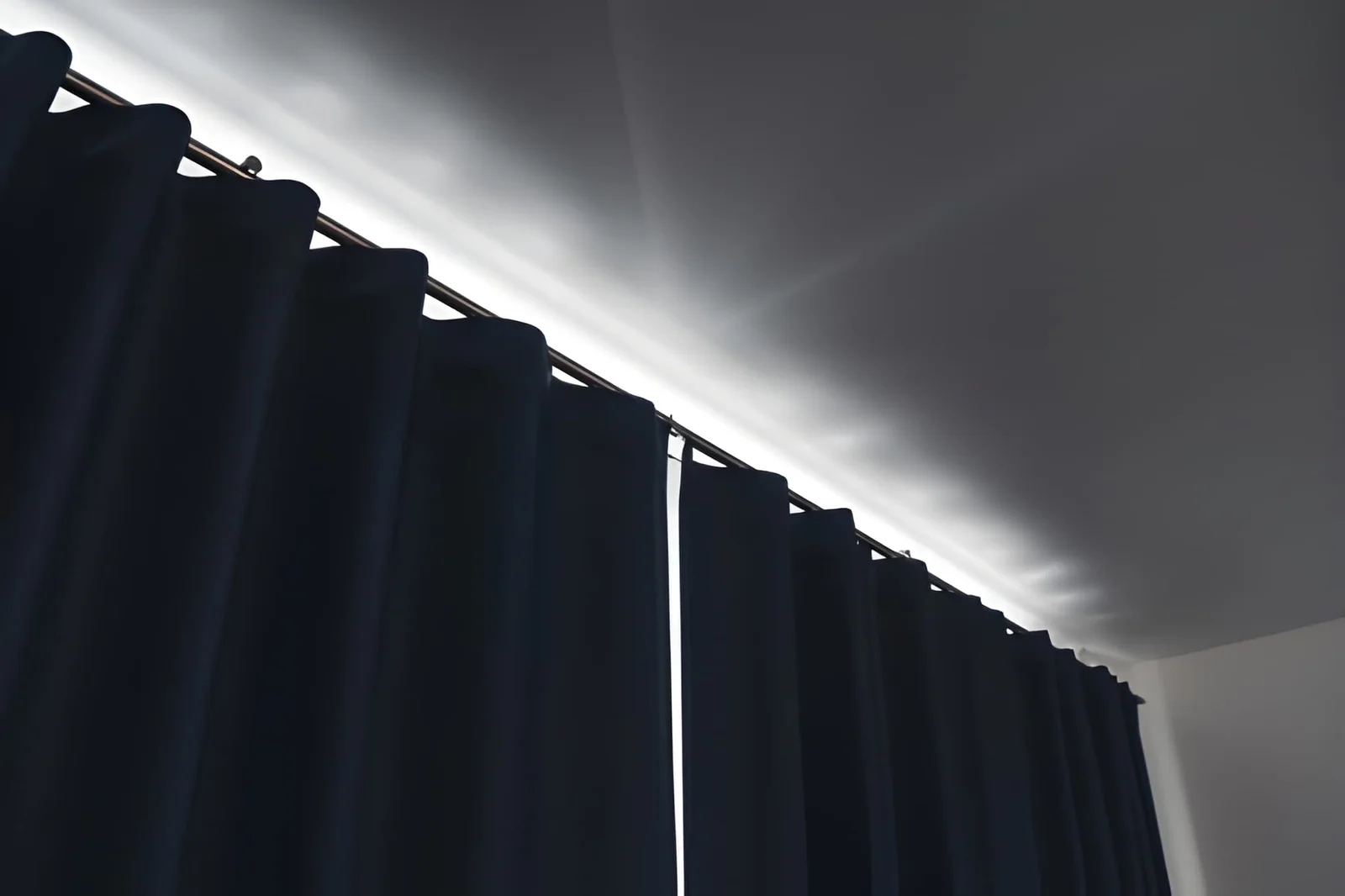
You close the curtains and the room still glows. A thin line of light down the side. A bright strip under the hem. Maybe the whole fabric turns orange when the sun comes up. If that sounds familiar, your current curtains aren’t doing the job, and blackout curtains for bedroom use might be the fix.
The idea is simple. Thick, tightly woven or coated fabric stops most of the light trying to get through. The CDC lists a quiet, cool, relaxing bedroom as a habit that supports good sleep, and adults need at least seven hours a night. A dark room fits right in with that.
But not every pair earns the name. Some block half the light, some block nearly all of it, and how you hang them matters just as much as what you buy. Here’s what to look for, how to measure, and how to stop those annoying light leaks.
What Are Blackout Curtains?
Blackout curtains are heavy window curtains made to block light. They use a dense weave, a coated back, or a thick lining. Wikipedia notes that thermal or blackout styles often use tightly woven fabric in several layers, and that they can also dampen sound and slow heat.
Quick answer: the best blackout curtains for most bedrooms are triple-woven or fully lined panels, hung wide and high so they overlap the window by several inches on each side.
How Blackout Curtains Work
Light passes through the tiny gaps between threads. Blackout fabric closes those gaps. According to Wikipedia, fabric coated once, often sold as dim-out, absorbs roughly 50 to 70 percent of a direct light source, while three coats can block close to all of it. So “room darkening” and “total blackout” are not the same promise. You can read more about blackout fabric) if you like.
Here’s the catch. Light also sneaks in at the edges. The fabric can be perfect and the room can still leak, which we’ll fix below.
Types of Blackout Curtains
You’ll run into four main kinds while shopping.
Triple-Woven Curtains
Three layers are woven together, with a dark middle layer that stops the light. They hang like regular curtains and feel soft. Many can go in the washing machine, but check the label first.
Foam-Backed or Coated Curtains
A rubbery coat on the back does the blocking. These are often the darkest option and the cheapest. The downside is a stiffer feel, and rough washing can damage the coating.
Lined Curtains
This is a regular curtain with a separate blackout lining. You get a nicer front fabric, like linen or velvet, with the light blocking hidden at the back. Wikipedia says lined styles give the most light absorption and insulation of the common options.
Thermal Blackout Curtains
These add insulation on top of darkness. They’re handy in hot cities and cold winters, as long as the curtain sits close to the glass.
Here is a quick comparison:
| Type | Light blocked | Feel | Best for | Care |
|---|---|---|---|---|
| Triple-woven | Very high | Soft | Everyday bedrooms | Often machine washable |
| Foam-backed or coated | Highest | Stiffer | Strict darkness, tight budgets | Gentle wash only |
| Lined | Very high | Depends on front fabric | Style plus darkness | Varies by fabric |
| Thermal blackout | Very high | Thick | Hot or cold rooms | Moderate |
Benefits of Blackout Curtains for Bedroom Use
- They keep out sunrise, street lamps, and car headlights, so the room stays dark when you want it to.
- Night-shift workers and new parents can nap in the daytime without squinting at the ceiling.
- They can cool a room in summer by cutting direct sun.
- Heavy fabric softens outside noise a little.
- They add privacy at night, when your lights are on and the street can see in.
Downsides to Know First
Total darkness isn’t for everyone. You might sleep right through your alarm, so test them on a weekend. Cheap coated panels can look stiff and plasticky, and thin ones only dim the light. Heavy fabric also needs a strong rod and solid brackets.
Warning: In a kid’s room or nursery, keep cords out of reach and fix the rod securely. Heavy curtains can pull loose if a child tugs on them.
How to Choose the Best Blackout Curtains
Check the Light-Blocking Claim
Look for words like “total blackout,” “100 percent,” or “triple-woven.” Labels such as “room darkening” or “dim-out” mean some light still gets through. Customer photos taken at midday tell you more than any product description.
Pick a Heading Style
The heading is the top of the curtain. Rod-pocket and back-tab styles tend to cover the top gap better than grommets or ring clips, which leave small openings. A pinch-pleat curtain on a close-fitting rod works well too.
How to Measure and Hang Blackout Curtains
The rod should be wider than the window and higher than the frame, and the panels should reach the floor. Follow these steps.
- Hang the rod 4 to 6 inches (10 to 15 cm) above the window frame. Closer to the ceiling is even better for light control.
- Let the rod stick out 6 to 12 inches (15 to 30 cm) past each side. Wider means fewer side leaks.
- Measure from the rod to the floor. Let the hem skim the floor or stop half an inch (about 1 cm) above it.
- Buy panels that add up to about 2 times the rod width, so the fabric overlaps and looks full.
- Screw the brackets into studs, or use strong wall anchors. Blackout panels are heavy.
Not sure how to fix heavy brackets? Our guide on how to hang a heavy mirror covers anchors, and the tools and equipment guides can help you pick a drill and stud finder.
Tip: Hang the curtains, turn off the lights at midday, and stand in the room. Any glowing spot shows exactly where a gap needs fixing.
How to Stop Light Leaks
- Use a wraparound or return rod, so the panels curve back toward the wall.
- Add a valance or cornice above the rod to hide the top gap.
- Overlap the center panels by a few inches.
- Layer a blackout liner or a roller blind behind decorative curtains.
- Run hook-and-loop tape along the sides if the edges still glow.
Blackout Curtains for Different Rooms
Home Bedrooms and Nurseries
In a home bedroom, a triple-woven pair with a sheer layer is the easy all-rounder. Many parents also use blackout curtains in a nursery to help with naps, so pick a cordless style. For more layout ideas, browse our bedroom design section.
Hostels and Shared Rooms
Guests in a hostel sleep on different schedules. Blackout curtains around each bunk give every guest a small dark pocket of their own. Choose washable fabric with a fire-retardant label, and check your local fire rules before you order in bulk.
Offices and Rest Rooms
A rest corner, a studio, or a hotel-style room can all use blackout fabric. It also cuts glare on screens and video calls. If you’re planning the workspace too, see our home office design ideas.
Colors and Style
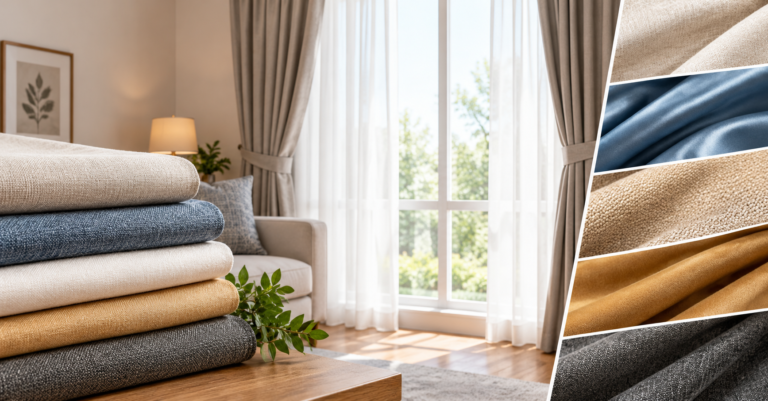
Blackout doesn’t have to look like a dorm room. Color doesn’t decide how much light gets blocked. The fabric and lining do. So a pale grey or cream panel can be just as dark as navy, as long as it’s truly lined or triple-woven.
Pick a shade that works with your walls. Planning to repaint? See our notes on painting and wall finishes, and check current color and style trends before you buy.
How to Clean and Care for Blackout Curtains
Vacuum once a month with a brush attachment. Wash only when the label says so, and spot-clean small marks first. For routines that fit a normal week, see our cleaning and maintenance tips.
Warning: Hot water, harsh soap, and a hot dryer can crack or peel the coating on coated blackout fabric. Always read the care label first.
Where to Buy
Good blackout curtains don’t have to cost a lot. Spend on lining and fabric weight, not fancy patterns. Short on cash? Our budget decor ideas show how to refresh a room cheaply. Styling the whole house? It’s worth learning how much an interior designer costs first.
Once you have your measurements, shopping online is easy. Try blackout curtains on Amazon US, blackout curtains on Amazon UK, or blackout curtains on Amazon UAE. Look for “total blackout” on the label, and check the return policy before you pay.
Final Thoughts: Make Your Room Dark Enough to Sleep
Choose a triple-woven or lined fabric, go wide and high with the rod, and fix the edge leaks. That’s most of the work. Tonight, grab a tape measure and note your window and rod numbers, then compare two or three options. Want more ideas? Browse our latest home design guides.
FAQs
Do blackout curtains block all light?
Not always. The fabric may block nearly everything, but light can still slip in around the edges and under the hem. Wide rods and overlapping panels fix most of it.
Are blackout curtains good for sleep?
They can help, mainly by cutting early sunlight and street glare. They won’t fix every sleep problem, so talk to a doctor if you struggle night after night.
Do blackout curtains keep a room cooler?
Often, yes, because they block direct sun. Thermal versions help more, especially when the curtain hangs close to the glass.
What is the difference between blackout and thermal curtains?
Blackout curtains focus on blocking light. Thermal curtains focus on insulation. Many products do both, so look for a label that says so.
Can I wash blackout curtains?
Many triple-woven ones can be machine washed on a gentle cycle. Coated types often need a gentler approach, so follow the label.
What color blackout curtains are best?
Any color works if the fabric is truly blackout. Pick the shade that suits your walls and your mood.


Join the conversation